
Roof Leak Repair in Southwest Florida: What to Do and How We Fix It

If your roof is leaking, stay off the roof. If water is near lights, outlets or ceiling fans, turn off power to that area at the breaker, as long as you can do it safely. Then move your belongings, catch the water, and take photos. Next, call a licensed roofer. Kelly Roofing has been a Naples family company since 1972, and we repair leaks on tile, shingle, metal and flat roofs across Lee and Collier counties. When water is coming in, our 24/7 emergency service makes a temporary repair to stop it for a flat $599, the same during business hours or after hours, and the permanent repair is estimated separately. Many Southwest Florida leaks start at flashing, roof penetrations, valleys or aging underlayment, not in the roof surface you can see.
First steps when your roof leaks
Take a breath. A leak is stressful, but a few simple steps protect your family and your home while help is on the way.
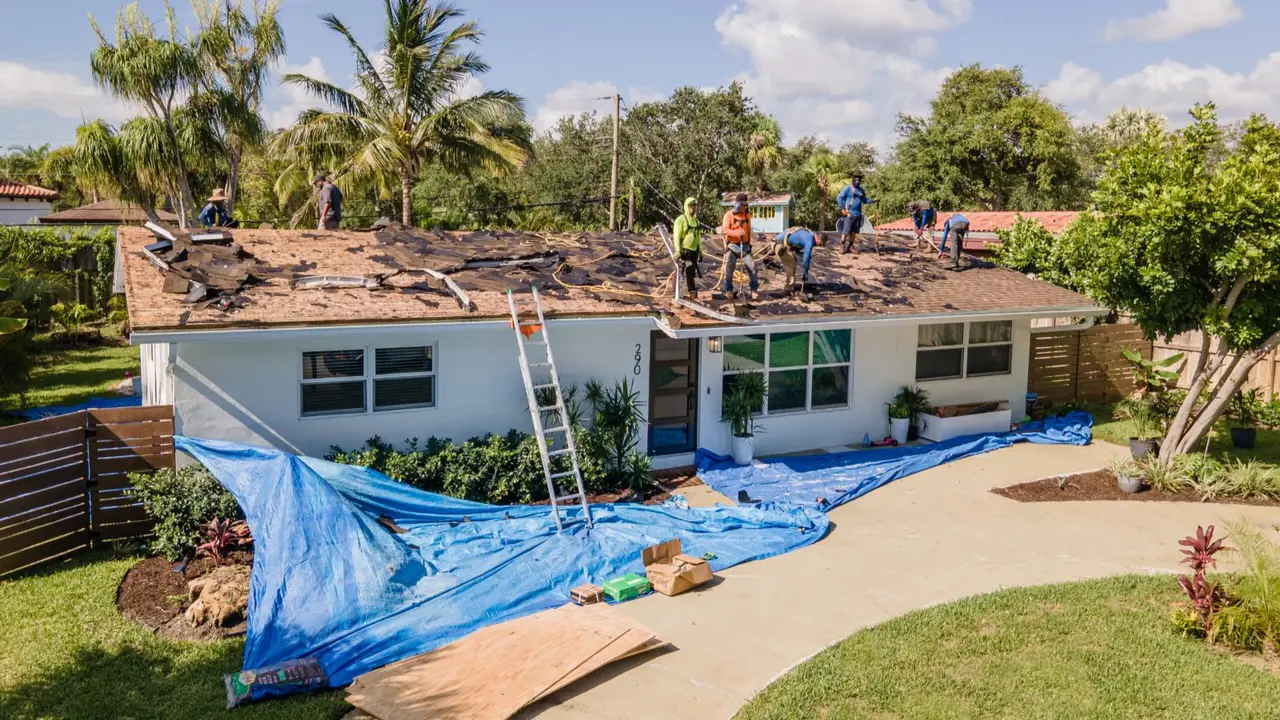
- Stay off the roof. Wet roofs are slippery, metal roofs are slippery even when dry, and rotted decking can be hidden under the roofing and give way. Please leave the roof to us.
- Think about electricity first. If water is near a light fixture, outlet or ceiling fan, turn off power to that area at the breaker, but only if you can reach the panel safely and without standing in water. If a ceiling is sagging badly, keep people and pets out of the room.
- Catch the water. Pots and buckets work. For bigger leaks, a rolling trash bin holds more and is easier to move.
- Relieve a bulging ceiling carefully, or skip it. If a ceiling is holding water, it's not near a light fixture, and you can reach it safely, a small hole at the lowest point lets the water drain into a bucket in one stream. Stand to the side. If you're unsure, don't do it.
- Move and protect your belongings. Lift items off the floor or move them to a dry room, and cover what can't be moved.
- Take photos and notes. Photograph the ceiling, walls and anything that got wet. Write down when the leak shows up, for example only in wind-driven rain or during heavy afternoon storms. That detail helps us find the source faster.
- Start drying. Fans and a dehumidifier help limit moisture damage once the dripping slows.
- Call a licensed roofer. Call Kelly at (239) 435-0014. If you'd rather call someone else, make sure they hold a Florida license, which you can check at MyFloridaLicense.com.
Why roofs leak in Southwest Florida
Our climate is hard on roofs. Strong sun and heat age materials year-round. Summer brings frequent heavy thunderstorms and wind-driven rain, and homes near the coast in Naples, Marco Island, Fort Myers Beach and Cape Coral also deal with salt air. Here's where we most often find leaks on each kind of roof.


Tile roofs
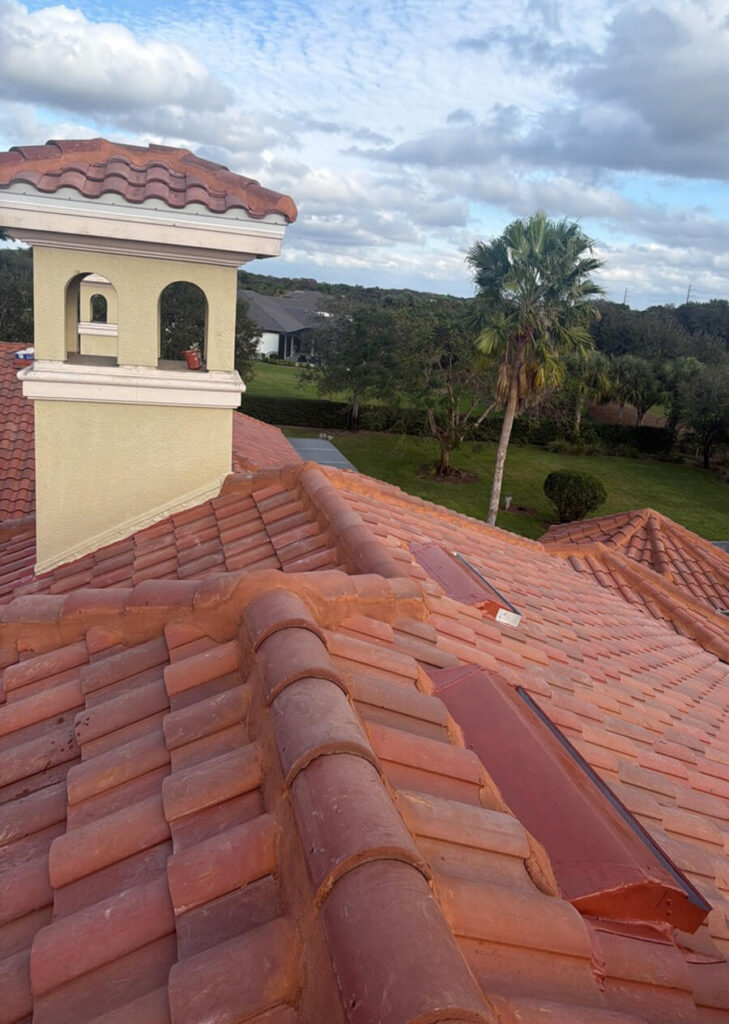
- The underlayment is the real water barrier, not the tile. Tiles shed most of the water, but the underlayment and flashing underneath keep your home dry. As underlayment ages, leaks can start even when every tile looks fine. That's why sealing a cracked tile rarely stops a leak.
- Valleys, walls and penetrations. Pipes, vents, skylights, chimneys and places where the roof meets a wall are common leak points.
- Cracked, broken or slipped tiles, often from wind, falling branches or foot traffic, can let water reach underlayment that's already wearing out.
- Top flashing. Without it, water can run under the tile onto the underlayment. See our top flashing page.
Shingle roofs

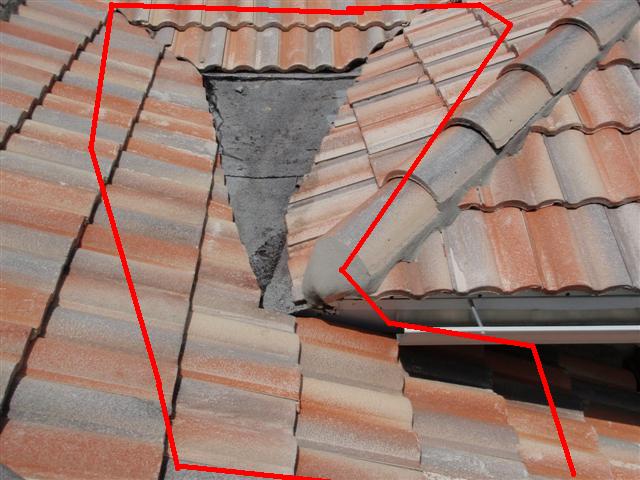
- Shingles lifted or torn off by wind
- Worn pipe boots and flashing at vents, walls and chimneys
- Aging shingles with heavy granule loss, cracking or curling after years of strong sun
Metal roofs
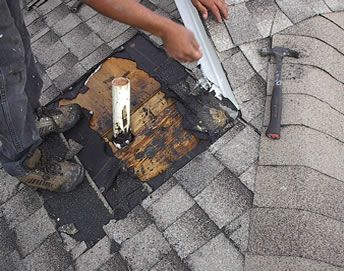
- Fasteners: the rubber washers on exposed screws break down over time.
- Penetrations: any spot where a pipe or vent passes through the metal needs proper flashing. Sealant alone is only a stopgap.
- Seams and flashing overlaps: water can wick up where panels or flashings overlap.
- Rust, especially near salt air, at cut edges, fasteners and places where water sits
Flat and low-slope roofs
- Perimeter flashings, pipe boots, vents, pitch pans, and places where a flat roof ties into a sloped roof or a wall
- Drains: the whole roof is designed to send water to them, so a failing drain can cause a leak that needs a real repair, not a patch.
- Ponding water, membrane seams, and cracking or blistering from heat and sun
- Tarps rarely work on flat roofs because water runs underneath them.
When it isn't the roof
Sometimes what looks like a roof leak comes from a skylight, an air-conditioning line, a window, or a wall. A good inspection checks those too, so you don't pay for roof work you don't need.
How Kelly finds and fixes your leak
- We listen first. Where is the stain? When does it leak? What's been done before? Your notes and photos help.
- We inspect inside and outside. We look at the ceiling, at the attic where it can be reached, and then at the roof. When helpful, we use an infrared camera or a moisture meter to trace water back to its source.
- We document what we find with photos, so you can see it too.
- We explain your options in writing, including what it costs to repair and whether repair is the right call.
- We repair it with the right materials for your roof system, carefully matching existing tile or shingles as closely as possible.
Emergency temporary repairs to stop the water
When water is actively coming in, the first job is to stop it. Kelly's 24/7 emergency service is a flat $599, the same price during business hours and after hours. That covers a temporary emergency repair, such as a tarp or dry-in, to stop water coming in at one area of the roof. Our service vehicles carry materials for every roof system. The permanent fix is estimated separately, and no further work starts without your approval.
Permanent repairs
A lasting repair fixes the cause, not just the symptom. That may mean replacing worn flashing, a pipe boot or a section of underlayment, re-securing or replacing tiles, or replacing damaged decking. When the repair needs a permit, we pull it and schedule the inspection. Every repair we make is warrantied, which many roofers don't do.
What about insurance?
Whether insurance covers a leak depends on what caused it and on your policy. Your insurer or agent is the right person to explain your coverage. Under Florida law, roofing contractors may not interpret policies or adjust claims unless they're licensed public adjusters. What we can do is document the roof's condition with photos and give you a clear, itemized estimate.
Repair or replace? Honest guidance
Most leaks can be repaired. We'll recommend replacement only when it truly makes more sense for you.
A repair usually makes sense when
- The leak is in one area and the rest of the roof is sound
- The underlayment and decking around the leak are still in good shape
- The roof has plenty of useful life left
Replacement is worth discussing when
- An older tile roof's underlayment is failing in many places. Tiles can often be reused or replaced one at a time, but the underlayment wears out.
- Leaks keep coming back in different spots
- Decking is soft or rotted across a large area
- Repair costs keep adding up on a roof near the end of its life
A Florida code point that affects the choice
The Florida Building Code has long limited how much of a roof section can be repaired within 12 months before the whole section must be brought up to current code. Often called the "25 percent rule," it applies when 25 percent or more of a roof section is repaired, replaced or recovered. Florida law now makes an exception: if your roof was built, repaired or replaced under the 2007 Florida Building Code or a later edition, only the portion being repaired has to meet the current code (section 553.844(5), Florida Statutes). We'll tell you which situation applies to your roof.
Between repairs, regular check-ups help a roof last. Our Roofiversary program inspects your roof every other year, even if someone else installed it.
Frequently asked questions
What should I do first when my roof starts leaking?
Stay off the roof. Turn off power at the breaker if water is near electrical fixtures and you can do it safely. Catch the water, move your belongings, take photos, and call a licensed roofer.
Can Kelly stop an active leak right away?
Yes. Our 24/7 emergency service is a flat $599, during business hours or after hours. It covers a temporary repair, such as a tarp or dry-in, that stops water coming in at one area. We then estimate the permanent fix, and no further work starts without your approval.
Should I climb up and put a tarp on the roof myself?
We'd rather you didn't. Wet and metal roofs are slippery, and damaged decking can give way. Focus on protecting the inside of your home and let a roofing crew handle the roof.
Why is my tile roof leaking when none of the tiles look broken?
On a tile roof, the underlayment under the tiles is the real water barrier. When it ages or is damaged around valleys, walls or penetrations, water can get in even with every tile intact.
How long does a roof leak repair take?
Most minor repairs are finished in one day. Tile repairs usually take one to three days, depending on the damage and the weather. Bigger repairs can take longer, and we'll give you a timeline first.
Will my insurance pay for a roof leak repair?
That depends on the cause of the leak and your policy. Sudden damage is treated differently from wear and tear. Ask your insurer or agent about coverage. We can document the roof with photos and give you an itemized estimate.
Should I repair or replace my leaking roof?
If the leak is in one area and the roof is otherwise sound, a repair is usually right. If the underlayment is failing in many places, leaks keep coming back, or the decking is damaged, replacement may make more sense. We'll explain both options honestly.
Do you repair leaks on roofs Kelly didn't install?
Yes. We repair tile, shingle, metal and flat roofs throughout Lee and Collier counties, whoever installed them.
Talk with the Kelly family
Dealing with a leak? Call us at (239) 435-0014. For a non-urgent repair, you can also request an estimate online. We'll find the cause and give you honest options. Hablamos español.