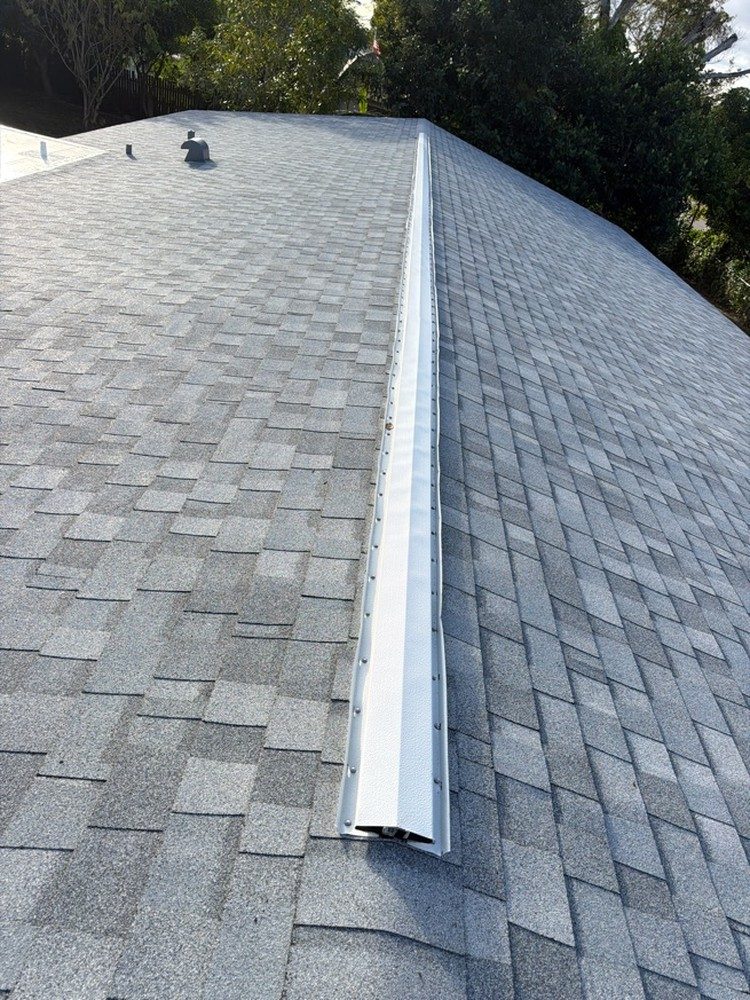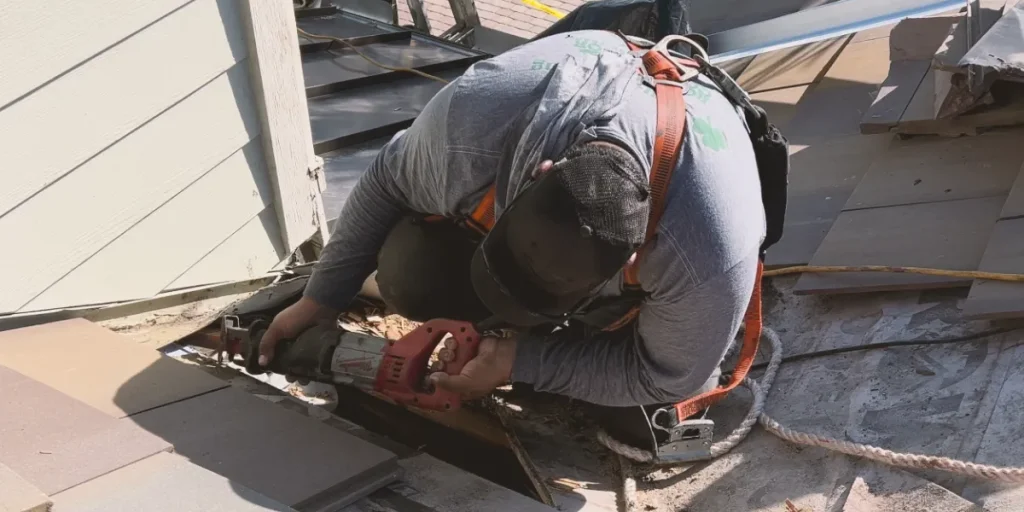
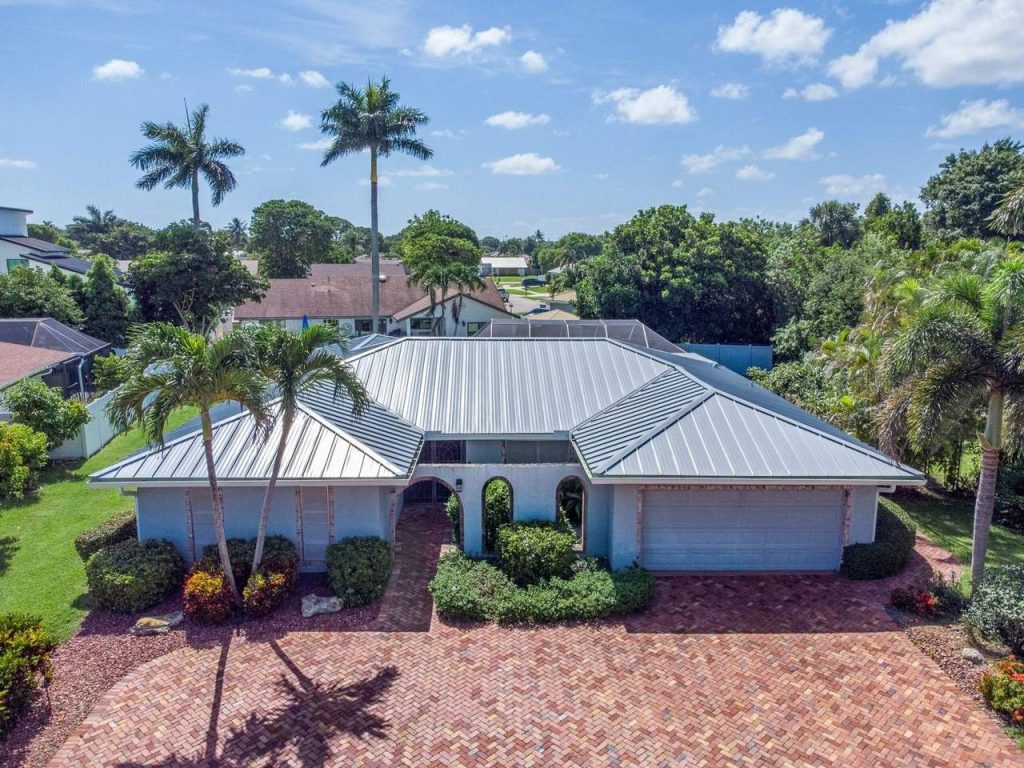
If you are replacing a roof with metal in Lee or Collier County, the first choice is not the color. It is which of the two families of metal roof you want: exposed fastener or standing seam. Here is the plain-English difference, and how we help homeowners from Naples to Fort Myers and Cape Coral decide.
Exposed fastener panels
On an exposed fastener roof, the screws go through the face of the panel and are sealed. These are the classic Florida metal roof profiles. The panels we install come from our metal manufacturer, Premier Metal Roofing Florida:
- 5V Crimp: a 24-inch panel with a 1/2-inch rib.
- TuffRib: a 36-inch panel with a 3/4-inch rib, and Premier’s most economical option.
- PBR: a 36-inch panel with a 1-1/4-inch rib.
Exposed fastener panels are a good fit when budget matters most and you like the traditional Florida look.
Standing seam (concealed fastener) panels
On a standing seam roof, the fasteners are hidden under the seams. No screw heads are exposed to the weather, and the roof has clean vertical lines. Profiles we install include:
- DuraSeam and ArmorSeam (clip-attached snap-lock).
- PermaShield (screw-strip standing seam).
- MasterSeam (mechanically seamed standing seam).
Standing seam is the choice when you want the cleanest look and no exposed screws.
Both have to meet the wind numbers for your address
Whichever family you choose, every metal roof has to meet the design wind speed and the required design pressures for its location and roof zones under the Florida Building Code. Three things drive those numbers: the design wind speed the code assigns to your address, your exposure (a home facing open water can need more than a similar home a few streets inland), and the roof zones, because wind lifts hardest at the edges and corners. Premier publishes how much uplift each panel and fastening pattern is approved for in its Florida Product Approval (FL30343). We compare those values to what your roof needs, zone by zone, and set the clip or screw spacing to match.
Near salt water, the metal matters more than the profile
In coastal Southwest Florida, the metal can matter as much as the panel shape. Galvanized and Galvalume steel carry warranty exclusions for homes close to salt water. Aluminum has no exclusion for saltwater proximity. If your home is near the Gulf, a bay, a canal or a marsh, we recommend aluminum, and we check your address against the manufacturer’s saltwater setbacks before you choose. Our Metal Roof Replacement page has Premier’s coastal options side by side.
Which one is right for you?
A quick way to think about it:
- Choose exposed fastener if budget comes first and you like the classic Florida 5V or ribbed look.
- Choose standing seam if you want hidden fasteners and clean lines.
- Either way, choose the metal (steel or aluminum) based on how close you are to salt water.
Want the look of tile or shake instead? See our stone-coated steel page. Already have a metal roof with problems? Start with common metal roof problems and our metal roof repair service.
Kelly Roofing is a family company that has served Lee and Collier counties since 1972, with 75,000+ roof projects. We work on existing homes and buildings only, not new construction. Florida Certified Roofing Contractor, license CCC1325948. Call (239) 435-0014 for a free inspection.