Why Cracked Concrete Roof Tiles Are a Concern in Florida?
Address them fast, because even a small crack can invite bigger damage. Kelly Roofing knows these issues often start quietly but can lead to costly roof problems if ignored.
Here’s what you need to know at a glance:
- What causes them: Impact damage, thermal expansion, foot traffic, freeze-thaw cycles, UV exposure, and manufacturing defects
- Why they matter: Even small cracks can let water under your roof, damaging the underlayment and leading to leaks, mold, and structural rot
- Repair vs. replace: Small corner chips under 3 inches can sometimes be repaired with adhesive; cracks across the full face of a tile require replacement
- DIY risks: Walking on concrete tiles can crack them further — professional inspection is strongly recommended
- Lifespan: A concrete tile roof lasts 30 to 75 years depending on maintenance and climate conditions
Concrete tiles dominate the US roof tile market, holding a 95% share — and for good reason. They’re durable, fire-resistant, and well-suited to Florida’s heat and storms. But they’re not indestructible.
In Florida’s climate, tiles face intense UV exposure, high humidity, and heavy rain year-round. Over time, this breaks down the tile surface, causes moisture absorption, and leads to cracking. A single cracked tile might look minor. But left alone, it can become a much bigger — and more expensive — problem.
The good news? Most cracked tile issues are fixable when caught early.

Common Causes and Risks of Cracked Concrete Roof Tiles
When we look at a roof in Naples or Sarasota, we aren’t just looking at individual pieces of concrete; we’re looking at a complex water-shedding system. Concrete tiles are incredibly heavy, weighing anywhere from 900 to 2,000 pounds per square (a “square” is a 10-by-10-foot area). This weight provides excellent wind resistance during Florida hurricanes, but it also means the structural load on your home is significant.
One of the primary reasons we see cracked concrete roof tiles is thermal expansion. Florida sun beats down on the roof all day, heating the tiles to extreme temperatures. At night, or during a sudden afternoon downpour, those tiles cool rapidly. This constant expanding and contracting creates internal stress. Research into the Assessment of thermal cracking in concrete roof tiles shows that the temperature difference between the top and bottom of the tile is a major driver of these cracks.
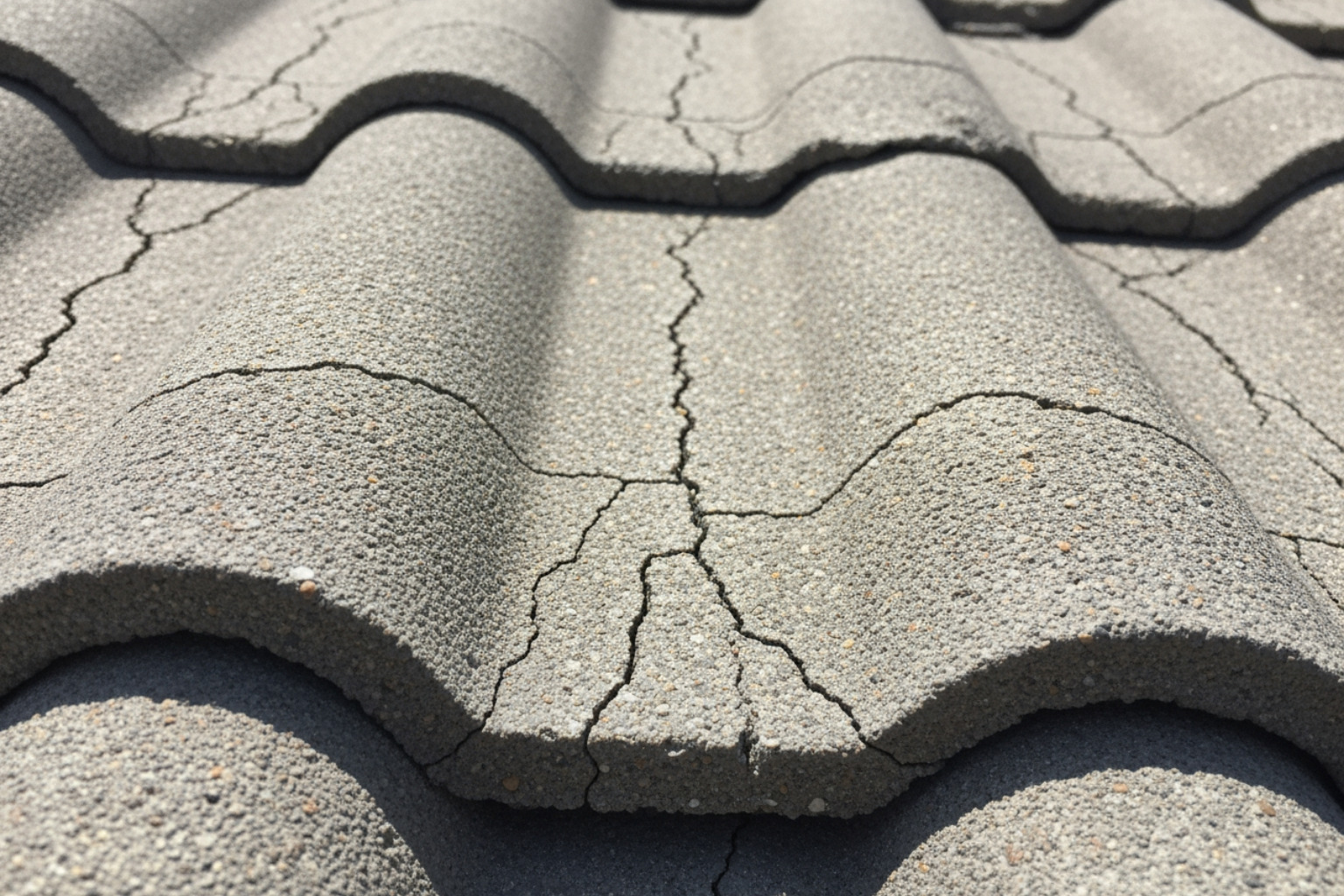
Other common culprits include:
- Hail Impact: While less frequent in Florida than in the Midwest, hail does happen. Assessing Hail Damage to Concrete Tile Shingles highlights how even small hailstones can create micro-fractures that widen over time.
- Foot Traffic: Concrete tiles are brittle. If a technician, painter, or homeowner walks on the wrong part of the tile (the center instead of the reinforced overlap), the tile can snap instantly.
- Manufacturing Defects: Sometimes the issue starts at the factory. Voids in the concrete or improper handling of “green” (uncured) tiles can lead to structural weaknesses.
Identifying Environmental and Structural Damage
In our coastal service areas like Sarasota and Marco Island, the environment plays a huge role. Salt spray and high humidity can lead to moisture absorption. Unlike clay, concrete is porous. When it absorbs water, it becomes heavier and more prone to “spalling” or surface flaking.
We also keep an eye out for specific patterns. For example, corner cracks are incredibly common. These often happen at the interlocking edges. If the tiles were installed too tightly without the recommended 1/16-inch shunt (a tiny gap for movement), they will pinch and crack as they expand in the heat.
Interestingly, a heavy tile roof can even affect your home’s interior. If your roof was upgraded from shingles to concrete without reinforcing the frame, the weight can cause “compression cracking” in your drywall. You’ll notice these as vertical or horizontal lines along the seams of your ceiling or walls.
Why You Shouldn’t Ignore Cracked Concrete Roof Tiles
It’s tempting to look at one cracked tile and think, “I’ll get to that next year.” But cracked concrete roof tiles are rarely an isolated problem. A roof is an interconnected system. When one tile fails, it places more stress on the surrounding tiles.
The biggest risk is water infiltration. Concrete tiles are designed to shed water, but the real “waterproofing” is the underlayment beneath them. When a tile cracks, UV rays and water reach that underlayment. Underlayment isn’t meant to be exposed to the elements for long; it will rot, become brittle, and eventually leak.
As noted in the article When Do Cracked Concrete Tiles Become a Wider Concern?, once water penetrates the outer shell, you face:
- Underlayment Rot: The secondary water barrier fails.
- Mold Growth: Florida’s humidity turns a small leak into a health hazard quickly.
- Energy Efficiency Loss: Damp insulation doesn’t keep your home cool.
- Structural Instability: Water can eventually reach the wood trusses and decking.
Professional Solutions for Long-Lasting Roof Protection
Because concrete tiles are so heavy and brittle, we always recommend a professional assessment. Walking on a tile roof is an art form—you have to know exactly where to place your weight (usually on the lower three inches of the tile where it overlaps the one below) to avoid causing more damage.
When we come out to your home in Naples or Sarasota, we bring specialized gear and decades of experience. We don’t just look for the crack; we look for why it happened. Is it a one-time impact, or is it a sign of a structural shift?
The Step-by-Step Process for Replacing Cracked Concrete Roof Tiles
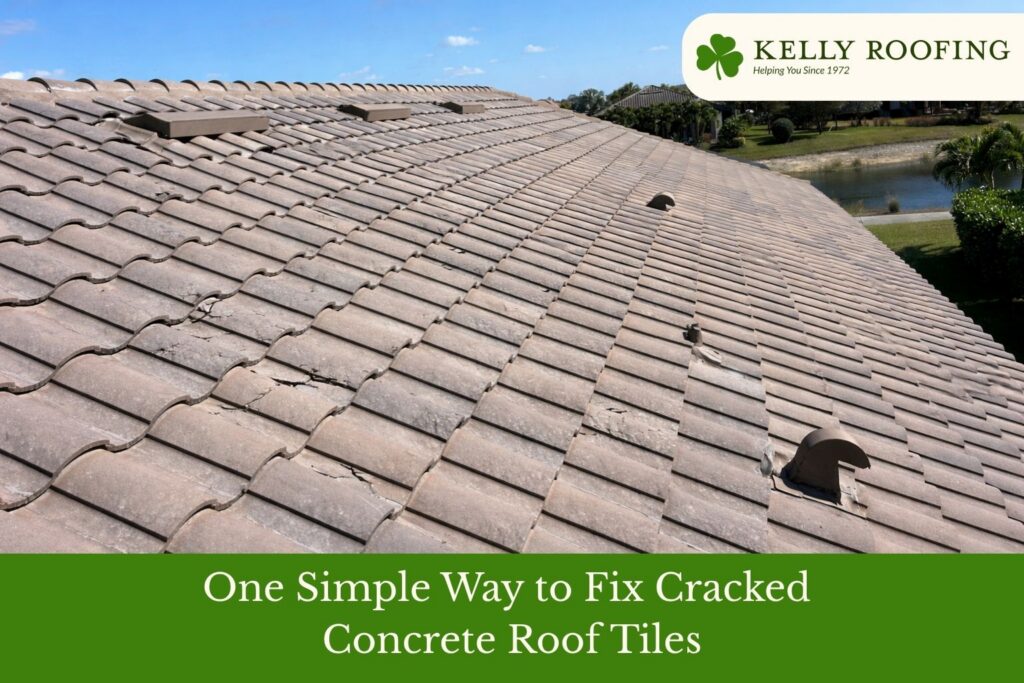
 Cracked Concrete Roof Tiles
If a tile is beyond simple repair, we follow a strict replacement process to ensure the roof remains watertight. Here is how we handle it:
- Tile Removal: We carefully lift the overlapping tiles using a pry bar and remove the broken pieces.
- Underlayment Inspection: This is the most critical step. We check the felt or synthetic underlayment for holes or rot. If it’s damaged, we patch it before the new tile goes down.
- Batten Check: We ensure the wood strips (battens) the tiles hang on are secure and rot-free.
- New Tile Installation: We slide a matching tile into place. Sourcing is key here—since concrete tiles can last 50+ years, finding a color match for a 20-year-old roof takes a deep network of suppliers.
- Adhesive and Fasteners: Depending on the location (like the ridge or rake), we use hurricane-rated adhesives or stainless steel fasteners to lock the tile in. We follow the Technical guidelines for chipped and broken tiles to ensure the repair meets industry standards.
Determining When to Repair vs. Fully Replace
Not every crack requires a brand-new tile. We use the “Three-Inch Rule.”
- Repair: If a corner chip is less than three inches and doesn’t reach the “water course” (the channels that direct water down the roof), we can often use a specialized, UV-stable roofing adhesive to bond the piece back on. This is common for “cover-lock” chips that are mostly cosmetic.
- Replace: If the crack goes all the way across the face of the tile, or if the “under-lock” (the part tucked under the next tile) is broken, the tile must be replaced. A crack across the face acts like a gutter, funnelling water directly onto your underlayment.
We also consider the roof slope. On a steep roof, water moves fast and is less likely to seep through a tiny crack. On a lower-pitched roof, water “dwells” longer, making even small cracks a high priority for replacement.
Maintenance Practices to Prevent Future Cracking
The best way to deal with cracked concrete roof tiles is to prevent them from happening in the first place. Here’s our checklist for Florida homeowners:
- Keep it Clean: Debris like pine needles and leaves can trap moisture against the tiles. This leads to moss and algae growth. Algae might just look like black streaks, but it actually holds moisture against the tile, accelerating the aging process.
- Gutter Maintenance: If gutters are backed up, water can “wick” back up under the bottom row of tiles (the eave), leading to rot and tile displacement.
- Chemical Cleaning: Never pressure wash your tiles! High pressure can strip the protective finish and make the concrete more porous. We use a soft-wash chemical treatment that kills organic growth without damaging the tile.
- Avoid Walking the Roof: If you need to put up holiday lights or check a satellite dish, try to do it from a ladder. If you must walk on the roof, wear soft-soled shoes and stay on the “laps” of the tiles.
- Regular Inspections: We recommend a professional check-up every 2 years. We look at the flashings (the metal bits around chimneys and vents) and the mortar “mud” on the ridge caps, which can crack over time due to the same thermal expansion that affects the tiles.
Professional Care for Your Florida Home

Your roof is your home’s first line of defense against the Florida elements. While concrete tiles are incredibly tough, they do require an expert eye to stay in top shape. Whether you’ve noticed a few slipped tiles or are worried about the age of your roof, we’re here to help.
At Kelly Roofing, we’ve been serving Florida families since 1972. As a family-owned business, we understand that a roof isn’t just a construction project—it’s your peace of mind. From the initial inspection to the final tile placement, our goal is to provide unmatched craftsmanship that lasts for decades.
If you’re searching for the best way to deal with cracked concrete roof tiles, now is the time to act. Schedule Expert tile roof repair services with Kelly Roofing today and get trusted help protecting your home, preventing leaks, and keeping your roof looking its best.